
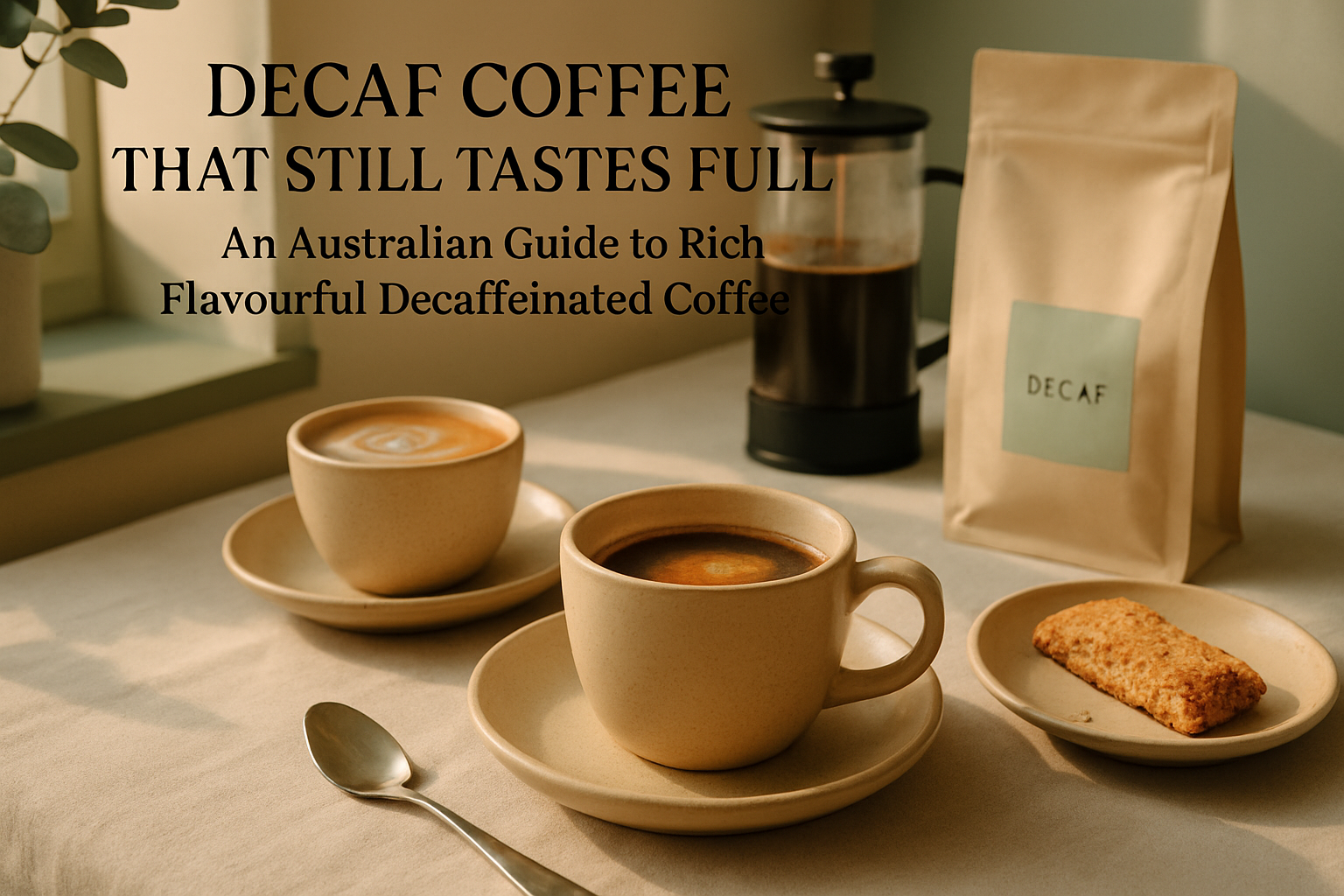
Can decaf coffee taste just as full and satisfying as regular coffee? Absolutely. While decaffeinated coffee often gets a bad rap for lacking depth and character, modern advances in decaffeination and a focus on quality sourcing mean you can enjoy a rich, full-bodied brew without the caffeine. This guide is designed to help Australian coffee lovers understand what makes great decaf coffee, how to pick the right beans, and how to brew it for maximum flavour.
Understanding Decaf Coffee: What Does Decaffeination Mean?
Decaf coffee is simply coffee that has had most of its caffeine removed. The goal is to retain the original beans’ flavour while eliminating approximately 97% or more of the caffeine. This makes decaf a great option for those avoiding caffeine for health, sleep, or personal preference reasons.
Common Decaffeination Methods Explained
- Swiss Water Process: A chemical-free method that uses pure water and osmosis to extract caffeine. It preserves much of the bean’s natural flavour and is popular for being chemical-free.
- CO2 Process: Uses liquid carbon dioxide to selectively remove caffeine. This method is highly efficient and retains the coffee’s aromatic compounds well.
- Solvent-based Methods: Use organic solvents like methylene chloride or ethyl acetate to extract caffeine. While effective, some prefer to avoid these due to chemical exposure concerns, though residues are minimal.
Each method impacts flavour differently. Swiss Water and CO2 processes tend to produce decaf coffees with fuller, cleaner taste profiles.
Why Does Decaf Coffee Often Taste Flat or Weak?
Decaffeination removes caffeine but can also strip away some flavour oils and aromatic compounds, leading to a less intense taste. Additionally, the quality of the beans used for decaf plays a huge role—cheap or over-roasted beans will amplify flatness. Finally, improper brewing methods can further dull the cup.
Choosing Full-Flavoured Decaf Coffee Beans in Australia
To enjoy rich decaf coffee, start with quality beans. Look for freshly roasted decaf blends that highlight flavour notes rather than just caffeine removal. At Drizzly Cafe, the Pure Bliss Decaf – Smooth Caramel & Fruity Delight is an excellent example. It’s crafted to deliver natural sweetness and complexity, perfect for those who want all the flavour without the jitters.
What to Look for When Buying Decaf Coffee Beans
- Freshness: Decaf beans can lose flavour quickly. Buy from local roasters or trusted Australian suppliers for maximum freshness.
- Origin and Processing: Single-origin decafs or blends with natural sweetness and acidity tend to taste brighter and more complex.
- Roast Level: Medium roasts preserve more flavour nuances than very dark roasts, which can mask subtle notes.
Brewing Tips for a Full-Flavoured Decaf Cup
Decaf coffee generally requires a slightly different approach to brewing to get the best flavour out of the beans.
Grinding
Grind size should match your brewing method but keep in mind decaf beans can be slightly more brittle. Use a high-quality burr grinder and adjust the grind finer if your coffee tastes weak or watery.
Water Temperature and Extraction
Use water between 90–96°C (just off the boil). Slightly cooler water can help preserve delicate flavours in decaf. Aim for an extraction time similar to regular coffee but be prepared to experiment within the recommended ranges.
Recommended Brew Methods
- Espresso: Decaf espresso can be tricky but rewarding. Try the Velvet Reserve – Decadent Dark Chocolate & Caramel Symphony for a blend well suited to espresso with rich, deep notes.
- Aeropress: Great for highlighting smooth, sweet flavours in decaf coffee.
- Pour-over: Allows you to control extraction and bring out nuanced aromas.
- French Press: Best for those who prefer a heavier-bodied cup; use a coarser grind to avoid over-extraction.
Common Mistakes and How to Avoid Them
- Using stale beans: Decaf coffee loses aroma quickly. Always use freshly roasted and ground beans.
- Incorrect grind size: Too coarse leads to weak coffee; too fine leads to bitterness. Adjust grind to your brew method and taste.
- Over or under-extraction: Experiment with brew time and water temperature to find the right balance.
- Ignoring water quality: Use filtered water to avoid off-flavours that dull the coffee’s character.
Troubleshooting Your Decaf Coffee
- Too weak or watery? Try grinding finer, increase dose slightly, or reduce brew time.
- Bitter or burnt taste? Coarsen grind, lower water temperature, or shorten extraction time.
- Lacking aroma? Ensure beans are fresh and stored in an airtight container away from light and heat.
- Flat taste? Experiment with different decaf brands or blends. Some blends, like Drizzly’s Pure Bliss Decaf, are designed for fuller flavour.
Key Takeaway: Decaf Coffee Can Be Full-Flavoured and Enjoyable
Decaffeinated coffee is no longer a dull alternative. With quality beans, the right brewing technique, and fresh ingredients, you can enjoy a satisfying, flavourful cup any time. Keep an eye out for blends like Pure Bliss Decaf – Smooth Caramel & Fruity Delight for natural sweetness and complexity without caffeine. Remember, freshness, grind size, and brew method are your best mates when crafting the perfect decaf cup.
FAQ
Can decaf coffee ever taste as good as regular coffee?
Yes, especially when made with high-quality beans using gentle decaffeination methods like Swiss Water or CO2 and brewed properly. While caffeine contributes to the coffee’s bitterness and body, flavour compounds remain that provide rich taste.
Is decaf coffee completely caffeine-free?
No, decaf coffee still contains a small amount of caffeine—usually about 1–3% of the original content. It’s low enough to avoid most caffeine effects but not zero.
How should I store decaf coffee to keep it fresh?
Store in an airtight container in a cool, dark place. Avoid the fridge or freezer if you use the coffee frequently, as moisture can degrade flavour. Buy smaller quantities to ensure freshness.
Does using instant coffee compromise decaf flavour?
Instant coffee can be convenient but often lacks complexity compared to freshly ground beans. For quality decaf taste, freshly roasted and ground beans like those offered by Drizzly Cafe usually provide a richer experience.
What’s the best brewing method for decaf coffee?
It depends on your taste preference. Espresso brings out intensity, Aeropress highlights smoothness, and pour-over accentuates nuanced flavours. Experiment to find what suits your palate best.