
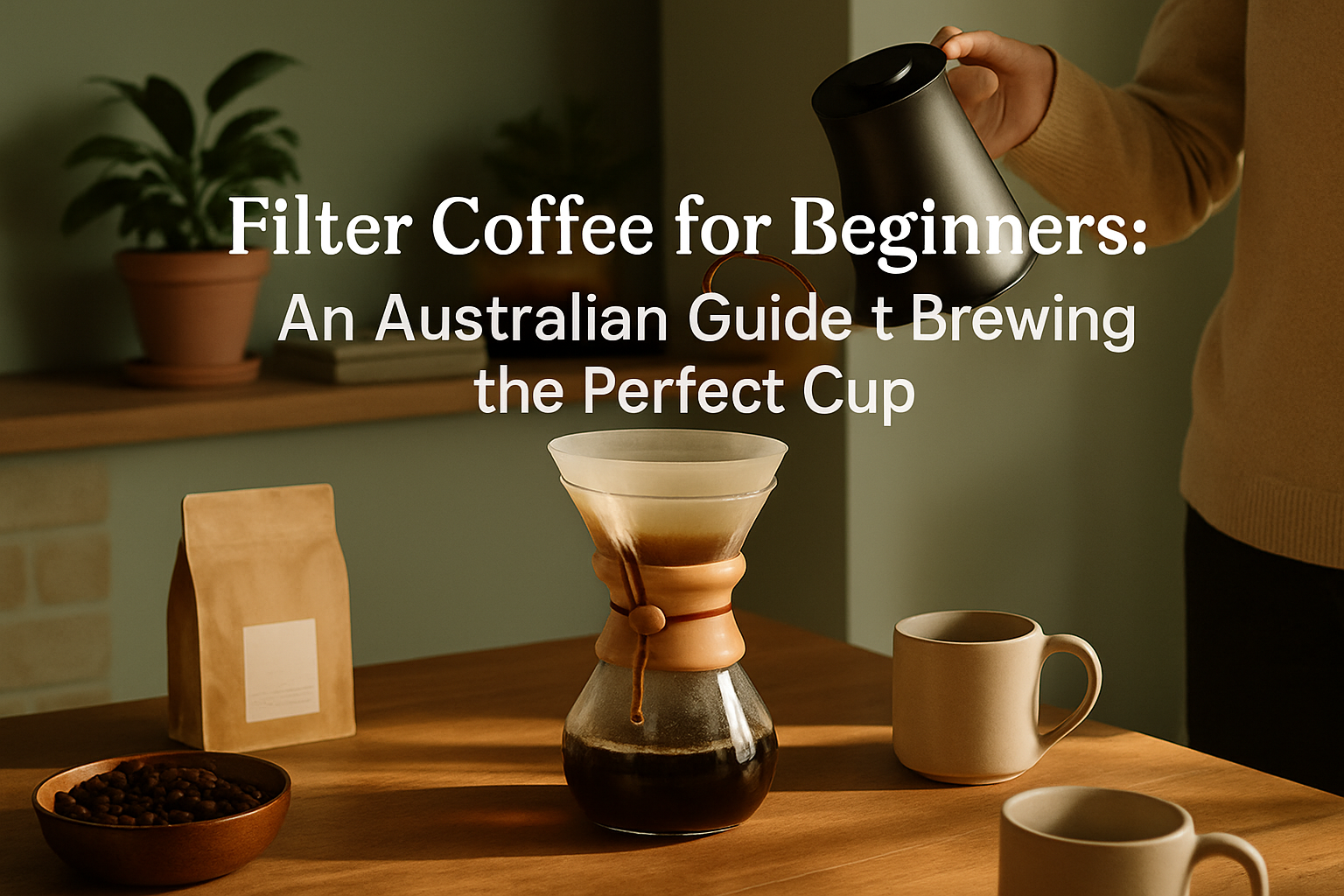
Filter coffee is a simple yet rewarding way to enjoy a clean, flavourful cup at home. If you’re new to this style of coffee, often known as pour-over or drip coffee, this guide will walk you through everything you need to know. From understanding essential terms to mastering your brew method and avoiding common pitfalls, our warm, knowledgeable Aussie approach will have you enjoying your perfect filter coffee in no time.
What is Filter Coffee?
Filter coffee refers to a brewing method where hot water passes through ground coffee held in a filter, extracting flavours gently and resulting in a clear, bright cup. Unlike espresso, which uses pressure, filter coffee relies on gravity to pull water through the coffee grounds slowly. This method highlights the coffee’s aromatic and nuanced flavours, making it a great choice for single-origin beans or blends with complex profiles.
Key Terms Explained
- Filter: Usually paper or metal, it holds the coffee grounds and allows liquid coffee to drip through.
- Grind size: The size of coffee particles after grinding. Filter coffee needs a medium grind — coarser than espresso but finer than French press.
- Pour-over: A popular manual filter method where water is poured over coffee grounds in a circular motion.
- Extraction: The process of dissolving coffee compounds into water. Proper extraction balances sour, sweet, and bitter flavours.
Choosing the Right Coffee for Filter Brewing
Not all coffees are created equal when it comes to filter brewing. Look for beans that offer brightness, clarity, and complexity. Single-origin coffees, such as Ethiopian or Peruvian beans, often shine in filter methods. If you prefer blends, something balanced with chocolate and caramel notes works beautifully.
At Drizzly Cafe, the Native Ground – Authentic Nutty Caramel & Citrus Essence is an excellent choice for filter coffee lovers. It’s 100% organic, with a crisp citrus sweetness perfect for black coffee. Alternatively, the Heritage Blend – Classic Chocolate & Toffee Harmony offers a versatile flavour profile enjoyed both black and with milk, highlighting natural sweetness and caramel undertones.
Essential Equipment for Beginners
- Dripper: Common types include the V60 or Chemex. These are easy to use and widely available.
- Filters: Paper filters are most common and help create a clean cup; metal filters let more oils through for a fuller body.
- Grinder: A burr grinder is recommended for consistent medium grind size.
- Kettle: A gooseneck kettle allows precise pouring control, which is key for even extraction.
- Scale and Timer: Measuring coffee and water accurately helps achieve consistent results.
Step-By-Step Guide to Brewing Filter Coffee
- Measure: Use about 15 grams of coffee per 250ml of water for a balanced cup. Adjust to taste.
- Grind: Grind coffee to a medium consistency, similar to sea salt.
- Prepare your dripper: Place the filter in your dripper and rinse it with hot water to remove paper taste and preheat the equipment.
- Add coffee: Place the ground coffee in the filter, gently shake to level the bed.
- Bloom: Pour about 30-40ml of hot water (about 92-96°C) evenly over the grounds to saturate them. Let it sit for 30-45 seconds. This releases carbon dioxide and preps the coffee for extraction.
- Pour slowly: Continue pouring water in slow, circular motions, keeping the water level consistent without flooding. Aim to finish pouring within 2.5 to 3.5 minutes.
- Serve and enjoy: Remove the dripper, give your coffee a gentle swirl to mix flavours, and enjoy your fresh brew.
Pro Tips
- Water quality matters: Use filtered water for best flavour.
- Temperature control: Too hot water extracts bitter compounds; too cool leaves sour notes.
- Freshness counts: Use freshly roasted coffee within 2-3 weeks of roast date for peak flavour.
Common Mistakes and How to Fix Them
- Bitter or harsh coffee: Likely over-extracted. Try a coarser grind or lower water temperature.
- Sour or weak coffee: Under-extracted. Use a finer grind or pour water more slowly.
- Uneven extraction: Pour water evenly in slow circles, avoiding pouring in one spot.
- Filter clogging or slow dripping: Grind might be too fine or tamping too hard. Adjust grind size coarser.
Troubleshooting Your Filter Brew
If your coffee tastes off, start by reviewing your grind size and pour technique. Experiment with small adjustments to find your preferred balance. Keep a simple brewing journal noting coffee dose, grind, water temperature, and taste notes. This helps you dial in your method over time.
Why Filter Coffee is a Great Start for Beginners
Filter coffee is forgiving and flexible. It lets you explore coffee flavours without the pressure of complex machines or techniques. Plus, the equipment is usually affordable and easy to clean. Whether you’re making a single cup or a few for mates, it’s a practical and enjoyable way to connect with coffee.
Summary Takeaway
Filter coffee is all about balance and attention to detail. Start with fresh, quality beans like Drizzly’s Native Ground or Heritage Blend. Use a medium grind and clean, filtered water at the right temperature. Pour gently and patiently, and adjust your grind size and pouring speed to tune your cup. With a bit of practise, you’ll enjoy a bright, clean coffee that’s uniquely yours.